Barcelona is a city where architecture plays a central role in its identity. Beyond its historic streets and traditional neighborhoods, the city stands out as a reference for modern and contemporary architecture, urban experimentation, and innovative design.
Throughout the 20th and 21st centuries, Barcelona has welcomed internationally renowned architects and ambitious urban projects that have transformed its skyline and public spaces. This guide explores the most significant modern buildings, cultural landmarks, and architectural districts that define today’s Barcelona.
Early Modern Architecture and International Influence
Barcelona’s role in modern architecture became globally significant during the 1929 International Exhibition, when new architectural ideas based on functionality, openness, and material innovation were introduced to the city.
The German Pavilion (Barcelona Pavilion)
Designed by Ludwig Mies van der Rohe as the national pavilion of Germany, this building is one of the most influential works of modern architecture worldwide. Its minimalist composition, free-flowing spaces, and refined materials redefine the relationship between structure, space, and perception.
Today, the pavilion remains a key reference point for architects, students, and design enthusiasts visiting Barcelona.
Cultural Buildings and Contemporary Landmarks
MACBA – Museum of Contemporary Art Barcelona
Located in the Raval district, MACBA was designed by Richard Meier. Its white geometric volumes and extensive use of natural light create a strong contrast with the surrounding historic fabric, playing an important role in the area’s cultural and urban regeneration.
L’Auditori de Barcelona
This contemporary concert hall combines acoustic excellence with modern architectural design and forms part of a broader cultural complex near Plaça de les Glòries.
Teatre Nacional de Catalunya
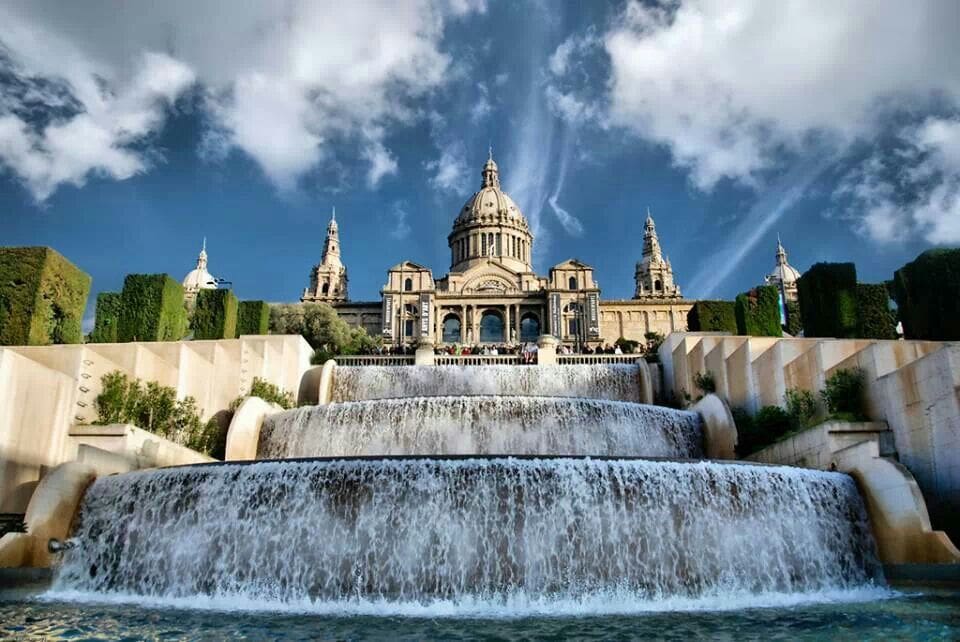
With its monumental scale and contemporary materials, this building stands as a modern cultural landmark while referencing classical architectural proportions.
Contemporary Architecture in Historic Neighborhoods
Barcelona is particularly notable for its ability to introduce contemporary architecture into dense historic areas without erasing their identity.
Mercat de Santa Caterina
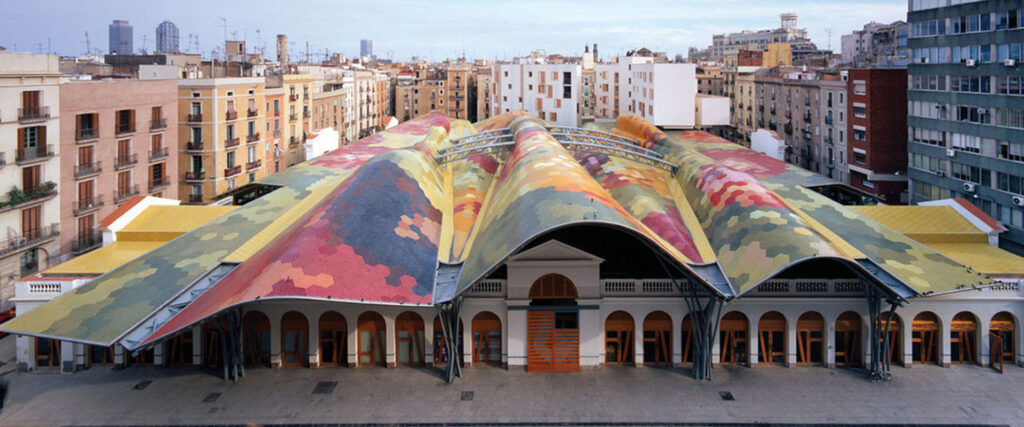
Located in El Born, this market redesign by Enric Miralles and Benedetta Tagliabue is a clear example of contemporary architecture integrated into a medieval urban fabric. Its undulating, colorful ceramic roof contrasts with the surrounding streets while preserving the traditional function of a local market.
Born Cultural Centre (Architectural Interventions)
Modern architectural elements—such as glass structures and open spaces—allow archaeological remains and historic buildings to coexist with contemporary cultural use, making history visible through modern design.
Filmoteca de Catalunya
Situated in El Raval, the Filmoteca represents a contemporary architectural intervention within a historically complex neighborhood, contributing to public space improvement and cultural revitalization.
MUHBA Plaça del Rei – Modern Additions
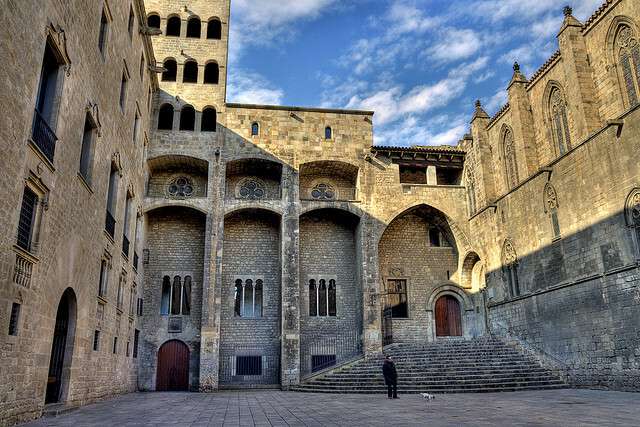
While the core structures are medieval, modern architectural solutions such as underground exhibition spaces and glass walkways allow visitors to experience Roman and medieval layers through a contemporary spatial approach.
Skyscrapers and the Contemporary Skyline
Torre Glòries
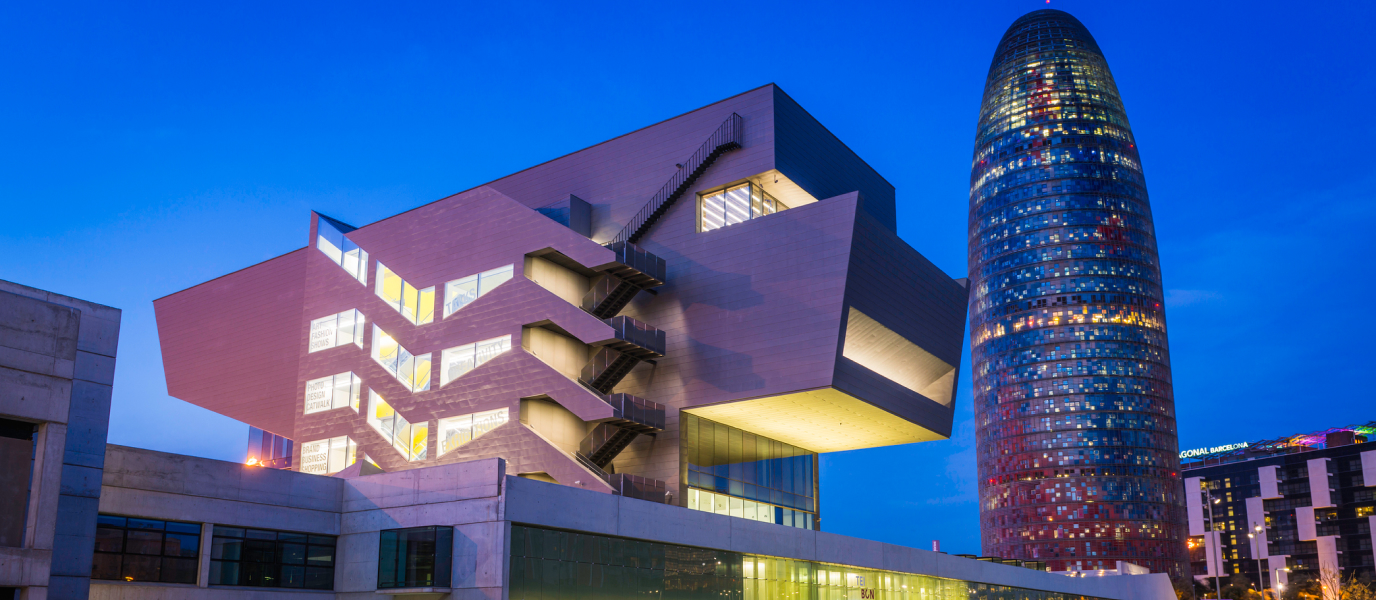
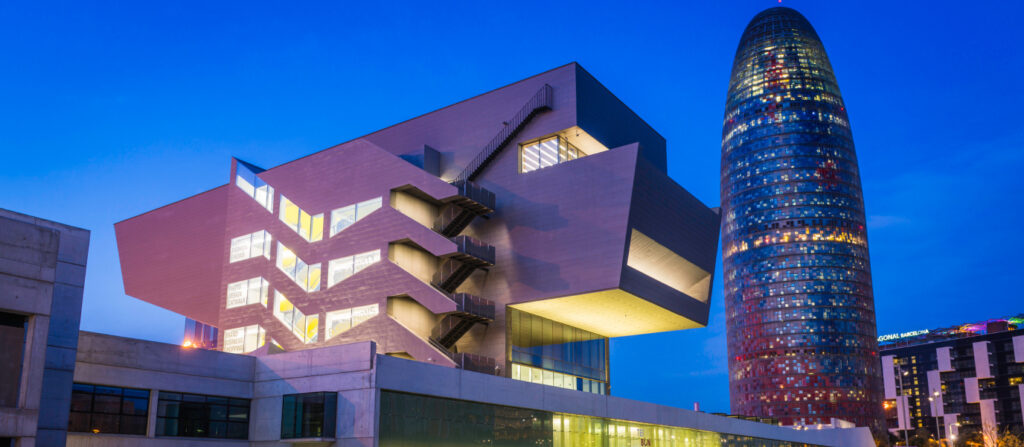
Designed by Jean Nouvel, Torre Glòries has become one of Barcelona’s most recognizable contemporary icons. Its organic shape and dynamic façade lighting system transform the skyline, especially at night.
Diagonal Zero Zero Tower
This sleek glass tower represents Barcelona’s international business and technology profile, combining efficiency with contemporary aesthetics.
W Barcelona Hotel
Located on the waterfront, this modern structure has reshaped the city’s maritime skyline, acting as a visual landmark where architecture meets the sea.
Contemporary Architecture and Urban Transformation
Glòries, Poblenou & the 22@ District
The 22@ District is one of Europe’s most ambitious urban regeneration projects, transforming former industrial land into a hub for innovation, technology, and contemporary architecture.
Mercat dels Encants (Encants Vells)
Located near Plaça de les Glòries, this historic market was reimagined with a striking mirrored roof that reflects the surrounding city. While the market’s origins are centuries old, its contemporary structure has turned it into a landmark of urban renewal and modern infrastructure.
Media-TIC Building
An award-winning example of sustainable architecture, Media-TIC features an intelligent façade system that regulates light and temperature, making it a reference for energy-efficient design.
Disseny Hub Barcelona (DHUB)
A bold contemporary building dedicated to design, creativity, and innovation, DHUB anchors the cultural identity of the Glòries area.
Sustainable Architecture and Public Space
Forum Building
Designed by Herzog & de Meuron, this triangular blue structure stands out for its bold geometry and integration into a large public space dedicated to events and urban life.
Parc del Centre del Poblenou
This landscape architecture project combines greenery, urban design, and contemporary forms, offering a new way to experience public space in a dense urban environment.
Urban regeneration initiatives
Pedestrian-oriented projects, redesigned public spaces, and sustainable mobility strategies demonstrate how architecture in Barcelona increasingly focuses on quality of life and environmental responsibility.
Best Areas to Experience Modern Architecture on Foot
- Diagonal Avenue, combining institutional and contemporary buildings
- El Born and El Raval, where modern architecture interacts with history
- Glòries, Poblenou, and 22@, showcasing innovation and urban transformation
- Forum and Diagonal Mar, examples of large-scale contemporary planning
These areas provide a comprehensive understanding of Barcelona’s architectural evolution.
Conclusion
Modern and contemporary architecture reveals Barcelona as a city in constant transformation. From early modern masterpieces to innovative skyscrapers and regenerated districts, architecture offers a deeper understanding of the city’s past, present, and future.
Exploring these spaces allows visitors to experience Barcelona beyond traditional sightseeing, through design, urban planning, and contemporary culture.
Exploring Barcelona with an Architecture Perspective
For travelers interested in understanding these buildings in greater depth, architecture-focused routes offer context, interpretation, and a more meaningful connection with the city.
At Bcityng, architecture itineraries are designed to be flexible and informative, adapting to different interests and ways of exploring the city.